 Owned
Owned

Mon-Fri 9am - 5pm Mountain time
Cart reopens in October
Subscribe to our email list
to stay updated
Russian Olive vs Eastern Cottonwood
Elaeagnus angustifolia
Populus deltoides
COMING SOON
(new stock expected: fall of 2026)
NOT AVAILABLE THIS SEASON - MIGHT RETURN
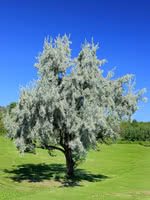
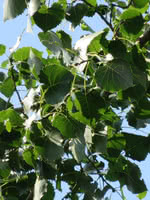
Russian Olive is a medium-sized deciduous tree that has attractive silvery coloured foliage with small yellow flowers that emit a fragrant sweet smell.
It is drought and salt tolerant, and works well as a shelterbelt species. Russian Olive can also be used to combat erosion.
Note: although Russian Olive is planted as an attractive boulevard tree in many northern areas, in warmer areas it can invade watersheds and is considered invasive. Please do some research and plant the right tree in the right place.
This fast and tall growing tree has an open, spreading crown and is more suited to waterside planting than other aspens and poplars.
Commonly found in floodplains, stream valleys and lake shores, this tree quickly fills in reclamation areas.
In order to reproduce and grow effectively, Eastern Cottonwood relies on the natural flooding cycle to ensure they are not out-competed by weeds and other plants.
Russian Olive Quick Facts
Eastern Cottonwood Quick Facts
In row spacing: 1.8 - 2.4 m (6 - 8 ft)