 Owned
Owned

Early Blue Violet vs Nuttalls Sunflower
Viola adunca
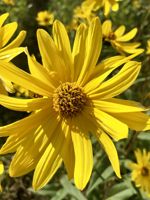
Helianthus nuttallii
NOT AVAILABLE THIS SEASON - MIGHT RETURN
NOT AVAILABLE THIS SEASON - MIGHT RETURN
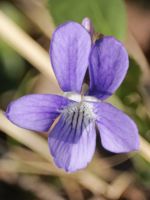
Early Blue Violet is a low-growing native perennial wildflower valued for its striking early-spring blooms. The flowers range in color from vibrant blue to deep violet, often marked with pale highlights and fine white hairs. They provide an important early nectar source for pollinators and serve as a host plant for several fritillary butterfly species.
It spreads by both seed and rhizomes, gradually forming small colonies. Its dark green, heart-shaped leaves add ornamental appeal, and the plant shows some resistance to deer browsing. Early Blue Violet is well-suited to naturalization projects and pollinator-friendly gardens, and has also been used in coastal butterfly habitat restoration in the Pacific Northwest.
Nuttall’s Sunflower is a native perennial wildflower known for its bright, golden-yellow blooms. Flowering from mid to late summer, it offers a late-season nectar source for various bees, butterflies, and other pollinators, while the seeds provide a fall food source for birds. The upright growth habit adds structural height and visual variety to your landscape.
Nuttall’s Sunflower can be found growing in moist to wet meadows, prairies, and open spaces. It can spread quickly via underground rhizomes, making it ideal for large-scale plantings. It is well-suited for naturalization, soil stabilization, riparian zones, and wetland restoration projects. If planting in smaller urban yards or gardens, extra care and maintenance will be required to limit its spread.
Early Blue Violet Quick Facts
Nuttalls Sunflower Quick Facts
Toxicity: rhizomes, fruit, seed poisonous to humans