 Owned
Owned

Water Arum vs Joe-Pye Weed
Eutrochium maculatum
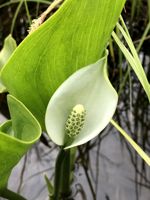
Calla palustris
NOT AVAILABLE THIS SEASON - MIGHT RETURN
CUSTOM GROW
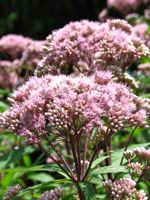
Joe-Pye Weed is a tall native perennial wildflower known for its clusters of fragrant pink flowers. Blooming from mid-summer to early fall, its long-lasting blooms attract a wide range of pollinators, including bees, butterflies, moths, and other beneficial insects. Adding to its ecological value, Joe-Pye Weed also serves as an important host plant for several species of butterflies and moths, and its seed heads provide food for small birds into the fall and winter.
Joe-Pye Weed is well suited to pollinator gardens, rain gardens, riparian zones and wetland plantings, as well as naturalization and restoration projects. It spreads through underground rhizomes to form small colonies and is generally easy to manage, though it may require additional care and maintenance in smaller urban yards and gardens. It is also resistant to deer, making it a good choice for gardens where deer are a concern.
Water Arum is a native perennial wetland plant known for its showy white oval sheaths (spathe) that surround a yellow-green, cylindrical flower spike (spadix). It has large, oblong, heart-shaped leaves on stems that rise above the water from shallow, spreading rhizomes. The blossoms are followed in late summer by tiny, pear-shaped fruits that ripen to bright red, adding ornamental interest to wet habitats.
Water Arum provides food for birds and small mammals that eat its berries, and its flowers attract pollinators. It can tolerate cold climates and forms colonies in shallow water and saturated soils. It is well-suited for ecological restoration, riparian planting, naturalisation, and habitat projects in wet and shaded environments.
Joe-Pye Weed Quick Facts
Water Arum Quick Facts
Toxicity: toxic if ingested