 Owned
Owned

Mon-Fri 9am - 5pm Mountain time
Cart reopens in October
Subscribe to our email list
to stay updated
Twinflower vs Tufted Hairgrass
Linnaea borealis
Deschampsia cespitosa
CUSTOM GROW
NOT AVAILABLE THIS SEASON - MIGHT RETURN
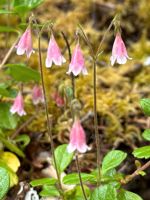
Twinflower is a native, trailing evergreen ground cover known for its delicate flowers that grow in nodding pairs. These pale pink blooms are described as being sweetly fragrant, attracting native bees and other pollinators.
Growing in cool, moist, acidic soils, the trailing stems form roots as they spread and start to form mats across the forest floor. Due to its woody stem, it is technically classified as a shrub and often referred to as a subshrub or dwarf shrub. This species is well-suited for naturalization, restoration, and conservation projects.
Twinflower (Linneae borealis) was named in honour of Carl Linnaeus, who adopted it as his personal emblem.
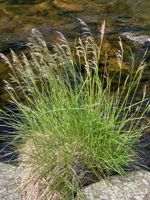
Tufted Hairgrass is a native perennial bunchgrass that forms dense clumps of dark green foliage. It produces tall, wispy seed heads in late spring and early summer, adding height and texture to the landscape. Its tidy, clump-forming habit and ornamental appeal make it well suited to smaller gardens and yards.
Tufted Hairgrass is a cool-season grass that grows most actively during the cooler parts of the growing season: spring and fall. Its adaptability allows it to establish across a range of sites, while its dense, fibrous root system helps stabilize soil. It is well suited to rangeland and prairie restoration, naturalization, erosion control, and revegetation projects.