 Owned
Owned

Mon-Fri 9am - 5pm Mountain time
Cart reopens in October
Subscribe to our email list
to stay updated
Small Cranberry vs Pinegrass
Vaccinium oxycoccos
Calamagrostis rubescens
CUSTOM GROW
CUSTOM GROW
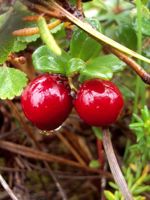
Small Cranberry is a native evergreen groundcover found in bogs, fens, and wet meadows. It produces delicate pink flowers that attract a variety of pollinators, including bees, and it serves as both a nectar source and host plant for the Bog Fritillary (Boloria eunomia) butterfly. By late summer, the plant bears deep red berries that are eaten by both wildlife and people. With their high pectin content, the berries are well-suited for making jams and jellies.
Often creeping among sphagnum moss, Small Cranberry thrives in cold, acidic, and nutrient-poor soils (pH 2.9–4.7), making it well adapted to northern wetland environments. With its woody stems, it is technically classified as a shrub and often described as a subshrub or dwarf shrub. It is also valuable for wetland restoration and naturalisation projects.
Note: We use Small Cranberry for Vaccinium oxycoccos. This species is also known by many other common names, including Bog Cranberry, Small Bog Cranberry, and others. Please confirm the scientific name to ensure you are ordering the correct plant.
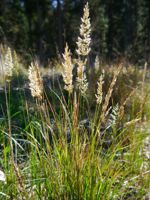
Pinegrass is a hardy, native perennial grass common in forested regions of western North America. It is an important understory species and is typically found beneath conifer canopies. Due to its spreading nature and ability to form dense mats that cover the forest floor, it helps stabilize soils and reduce erosion.
It provides forage for wildlife and livestock, shelter for small animals, and seeds for birds, playing an important ecological role in woodland ecosystems. Pinegrass is well-suited for ecological restoration, soil stabilization, and naturalization projects.