 Owned
Owned

Wild Bergamot vs Nuttalls Sunflower
Helianthus nuttallii
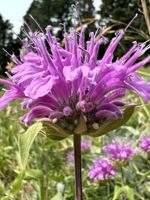
Monarda fistulosa
NOT AVAILABLE THIS SEASON - MIGHT RETURN
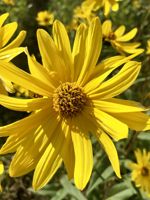
Nuttall’s Sunflower is a native perennial wildflower known for its bright, golden-yellow blooms. Flowering from mid to late summer, it offers a late-season nectar source for various bees, butterflies, and other pollinators, while the seeds provide a fall food source for birds. The upright growth habit adds structural height and visual variety to your landscape.
Nuttall’s Sunflower can be found growing in moist to wet meadows, prairies, and open spaces. It can spread quickly via underground rhizomes, making it ideal for large-scale plantings. It is well-suited for naturalization, soil stabilization, riparian zones, and wetland restoration projects. If planting in smaller urban yards or gardens, extra care and maintenance will be required to limit its spread.
Wild Bergamot is a native perennial wildflower that is known for its fragrant lilac-purple tubular flowers. The flowers grow in dense terminal heads and bloom from mid-summer to early fall. Deadheading spent flowers will encourage new blooms, prolonging its display. They attract pollinators such as bees, butterflies, and hummingbirds. It also serves as a host plant for the Raspberry Pyrausta (Pyrausta signatalis) butterfly.
Wild Bergamot belongs to the mint family, and its leaves, stems, and flowers are all edible. The leaves can be used to make tea or as a flavorful herb, with a taste often described as a blend of oregano and thyme.
It is resistant to deer and rabbits but can be susceptible to powdery mildew if planted too densely with poor air circulation. Wild Bergamot tolerates heat, drought, and poor soils, making it a low-maintenance addition to a variety of projects. It is well suited for pollinator gardens, wildflower gardens and naturalization projects.