 Owned
Owned

Sebastien Gooseberry vs Small Cranberry
Ribes uva-crispa Sebastien
Vaccinium oxycoccos
NOT AVAILABLE THIS SEASON - MIGHT RETURN
(new stock expected: fall of 2026)
CUSTOM GROW
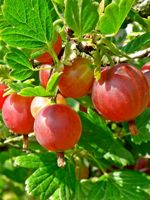
Sebastien Gooseberry is a nearly thornless variety that produces medium-sized, red gooseberries. When the berries are fully ripe they are quite sweet and great for fresh eating. They can be stored for up to two weeks in the fridge. For baking and preserves, they are often picked when under-ripe when they are firm and tart. The general harvest period is anywhere from July to September.
Sebastien Gooseberry is a Canadian variety that was developed at the Agriculture and Agri-Food Canada research station in Ottawa.
Gooseberries are self-pollinating but planting with another variety will increase yields.
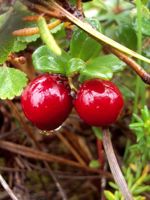
Small Cranberry is a native evergreen groundcover found in bogs, fens, and wet meadows. It produces delicate pink flowers that attract a variety of pollinators, including bees, and it serves as both a nectar source and host plant for the Bog Fritillary (Boloria eunomia) butterfly. By late summer, the plant bears deep red berries that are eaten by both wildlife and people. With their high pectin content, the berries are well-suited for making jams and jellies.
Often creeping among sphagnum moss, Small Cranberry thrives in cold, acidic, and nutrient-poor soils (pH 2.9–4.7), making it well adapted to northern wetland environments. With its woody stems, it is technically classified as a shrub and often described as a subshrub or dwarf shrub. It is also valuable for wetland restoration and naturalisation projects.
Note: We use Small Cranberry for Vaccinium oxycoccos. This species is also known by many other common names, including Bog Cranberry, Small Bog Cranberry, and others. Please confirm the scientific name to ensure you are ordering the correct plant.
Sebastien Gooseberry Quick Facts
Small Cranberry Quick Facts
Toxicity: leaves are toxic to humans