 Owned
Owned

Mon-Fri 9am - 5pm Mountain time
Cart reopens in October
Subscribe to our email list
to stay updated
Common Hackberry vs Opata Cherry Plum
Celtis occidentalis
Prunus besseyi x salicina Opata
COMING SOON
(new stock expected: fall of 2026)
COMING SOON
(new stock expected: fall of 2026)
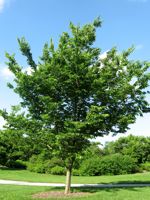
The Common Hackberry is a medium-sized deciduous tree that resembles the American Elm but is immune to Dutch Elm Disease. They are versatile and can adapt to a variety of growing conditions.
It produces purple-red, berry-like fruit with a large seed in the center. Both the sweet flesh, which tastes similar to dates, and the crunchy seed are edible. The fruit remains on the tree throughout the winter, offering a valuable food source for birds and other wildlife.
The Common Hackberry can also be a great addition to a pollinator garden. The tree itself is a host for the larvae of several butterfly species and the flowers provide a source of pollen and nectar.
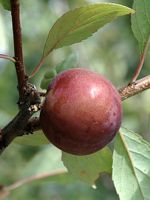
Opata Cherry Plum is considered to be one of the best tasting Cherry Plum varieties. It has a pleasant, sweet flavour and a hint of acidity. They ripen in mid to late August and are well suited to fresh eating, baking, and preserves.
The fruit is closer to a plum than a cherry but is smaller than most plums.The Opata Cherry Plum’s skin is red/green whereas the flesh is yellow-green. The flesh is freestone with a juicy, firm texture. Similar to other stone fruits, it does not store for very long.
The Opata Cherry Plum is a hybrid between a Western Sand Cherry and a Japanese (Chinese) Plum. For fruit production, it needs to be planted with another variety for cross-pollination. Canada Plum and American Plum are considered universal pollinizers.