 Owned

Red Mammoth Raspberry vs Dewberry (Dwarf Raspberry)
Rubus idaeus Red Mammoth
Rubus pubescens
NOT AVAILABLE THIS SEASON - MIGHT RETURN
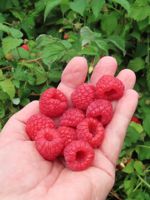
Red Mammoth is a high-yielding variety released in 1999 by the University of Saskatchewan Fruit Program, SK. It produces distinctively large bright red berries about 1 inch wide. It is also more cold hardy than older raspberry cultivars. Red Mammoth is firm which makes it suitable for commercial production and sweeter than Boyne. Needs to be trellised as canes are not as sturdy as other varieties.
Red Mammoth Raspberry is a floricane-fruiting variety, meaning it primarily produces fruit on second-year canes (previous season’s new growth). They are also referred to as summer-bearing. In late winter or early spring, cut back all spent floricanes, leaving only last season's canes.
Raspberries are self-fertile, meaning they do not require cross-pollination from another variety to produce fruit.
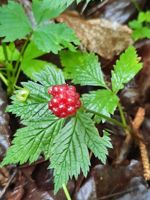
Dewberry (Rubus pubescens) is a native, low-growing perennial that spreads by creeping stems to form a natural groundcover. In spring, it bears small white flowers that attract pollinators, followed by bright red edible berries resembling tiny raspberries. They are an important food source for birds and mammals.
Widespread across Canada, Dewberry serves as a larval host plant for butterflies such as the Spring Azure (Celastrina ladon), adding to its ecological value. It is a suitable choice for naturalization, pollinator gardens, habitat plantings, and ecological restoration projects.