 Owned
Owned

Northline Saskatoon (Serviceberry) vs Blue Honeysuckle
Amelanchier alnifolia Northline
Lonicera caerulea
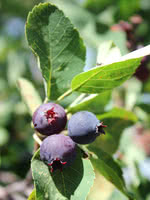
Northline Saskatoon is a native shrub that's famous for its great-tasting fruit. The berries are terrific for fresh eating and cooking. The Saskatoon bush itself can be quite large and produces an abundance of fruit. Saskatoons are hardy and can tolerate partial shade and a variety of growing conditions.
Northline Saskatoon is popular because it seldom gets over 8 feet in height, which makes it ideal for U-Pick orchards and over-row harvester equipment. The uniform ripening of the berries in full clusters and the desirable sweet taste also make this variety a favorite.
Starting an orchard or another project using thousands of plants? Give us a call for special bulk rates!
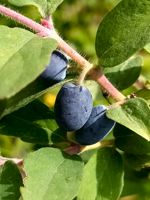
Blue Honeysuckle (wild Haskap or Honeyberry) is a cold hardy shrub and native to most of Canada. The pale yellow to white flowers provide nectar and pollen for bumblebees and other pollinators. The edible berries resemble elongated blueberries. They have a sweet-tart flavour often described as a blend of blueberry, raspberry, and blackcurrant, though wild berries can vary in taste.
Compared to popular cultivated varieties, the berries of Blue Honeysuckle are typically smaller and more variable in shape and flavour. While some enjoy eating the berries fresh, they are more commonly used in baking and preserves. Blue Honeysuckle can be used in hedgerows, border plantings, and naturalized landscapes. It may also serve as a cross-pollination partner in haskap plantings or as a decoy planting to draw birds and wildlife away from more desirable fruit crops.
Blue Honeysuckle has limited self-pollination and produces better yields when planted with other haskap plants or varieties for cross-pollination. Wild populations have not been studied as extensively as cultivated varieties, and because these plants are grown from seed, bloom timing and cross-pollination compatibility may vary.