 Owned
Owned

Mon-Fri 9am - 5pm Mountain time
Cart reopens in October
Subscribe to our email list
to stay updated
Elliott Blueberry vs Northern Bayberry
Vaccinium corymbosum Elliott
Myrica pensylvanica
NOT AVAILABLE THIS SEASON - MIGHT RETURN
NOT AVAILABLE THIS SEASON - MIGHT RETURN
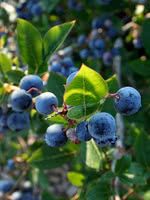
Elliott Blueberry is a very high yielding, commercial highbush blueberry variety. If you're lucky enough to live in a suitable climate zone, Elliott Blueberry will serve you well. Its medium-size berries mature late in the summer and have a mild flavor. The berries are firm and store well.
While this variety is self-pollinating, we recommend pairing Elliott Blueberry with Blue Crop Blueberry to increase the berry production of both varieties.
Note: Blueberries require very specific soil conditions. They need well-drained soil with a pH between 4.5 and 5.0. If the starting pH of your soil is between 5.1 and 6.2 you can lower it by adding sulphur. We recommend against planting blueberries in soil with a starting pH greater than 6.2. Please do your own research before buying any blueberry plants.
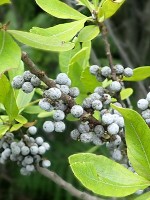
Northern Bayberry makes an excellent hedge or feature shrub. It will retain its leaves in warmer climates but drops them in colder areas. They produce blue-grey berries that have a wax coating on them that can be used to make candles or soaps.
In colder hardiness zones the leaves turn an attractive orange to red colour in the fall, making it a striking addition to your landscape.
Northern Bayberry is native to Nova Scotia and tolerates both drought and wet conditions. It is also a nitrogen fixer that tolerates poor soil conditions.
Elliott Blueberry Quick Facts
Northern Bayberry Quick Facts
Toxicity: Warning: The wax from bayberry fruit is considered toxic and may be carcinogenic.