 Owned
Owned

Bracted Honeysuckle vs Diamond-Leaf Willow
Salix planifolia
Lonicera involucrata
CUSTOM GROW
NOT AVAILABLE THIS SEASON - MIGHT RETURN
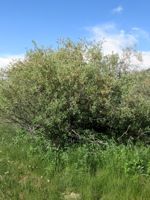
Diamond-Leaf Willow is a native deciduous shrub known for its glossy diamond-shaped leaves, which give the shrub its name. Its catkins emerge in spring, providing an important early source of pollen for pollinators. The shrub’s dense growth also offers valuable cover and browse for wildlife, including moose and deer.
This shrub is well-suited to cool, moist habitats such as wetlands, streambanks, and forest openings. It spreads by rhizomes, helping to stabilize soils and form dense thickets. Diamond-Leaf Willow is valuable for reclamation, wetland enhancement, shelterbelt plantings, and a wide range of conservation and habitat restoration projects.
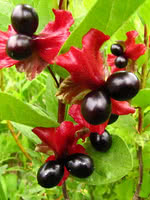
Bracted Honeysuckle is a shade loving shrub that is distinguishable from other honeysuckles by its square stem and pointed leaves. Native to most of North America, this honeysuckle is found along swamps, rivers, riparian zones and moist wooded areas.
If you have a erosion control project in mind, consider Bracted Honeysuckle.