 Owned
Owned

Mon-Fri 9am - 5pm Mountain time
Cart reopens in October
Subscribe to our email list
to stay updated
Royalty Raspberry vs Northern Bayberry
Rubus x Royalty
Myrica pensylvanica
COMING SOON
(new stock expected: fall of 2026)
NOT AVAILABLE THIS SEASON - MIGHT RETURN
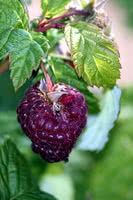
Royalty Raspberry is a productive and delicious red-purple raspberry. It is a cross between a red raspberry and a black raspberry. Ripening in late August, the berries are ideal for homemade jams, preserves, and fresh eating.
If you are going for more of a classic red raspberry taste, pick the berries early. But if they are left on the cane until they are purple the taste will be sweeter.
Royalty Raspberry is a floricane-fruiting variety, meaning it primarily produces fruit on second-year canes (previous season’s new growth). They are also referred to as summer-bearing. In late winter or early spring, cut back all spent floricanes, leaving only last season's canes.
Raspberries are self-fertile, meaning they do not require cross-pollination from another variety to produce fruit.
This very popular extra large berried variety was developed at Cornell University.
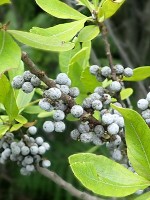
Northern Bayberry makes an excellent hedge or feature shrub. It will retain its leaves in warmer climates but drops them in colder areas. They produce blue-grey berries that have a wax coating on them that can be used to make candles or soaps.
In colder hardiness zones the leaves turn an attractive orange to red colour in the fall, making it a striking addition to your landscape.
Northern Bayberry is native to Nova Scotia and tolerates both drought and wet conditions. It is also a nitrogen fixer that tolerates poor soil conditions.
Royalty Raspberry Quick Facts
Northern Bayberry Quick Facts
Toxicity: Warning: The wax from bayberry fruit is considered toxic and may be carcinogenic.