 Owned
Owned

Mon-Fri 9am - 5pm Mountain time
Cart reopens in October
Subscribe to our email list
to stay updated
American Bittersweet vs Bracted Honeysuckle
Celastrus scandens
Lonicera involucrata
NOT AVAILABLE THIS SEASON - MIGHT RETURN
NOT AVAILABLE THIS SEASON - MIGHT RETURN
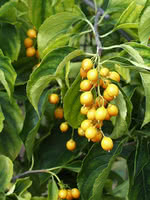
American Bittersweet is a deciduous, woody, perennial vine with striking orange to yellow berries that persist into winter. Indigenous to North America, this vine has become so rare it is now considered a protected species.
Excellent for naturalization projects, American Bittersweet attracts birds and other wildlife. Please keep in mind that the plant is toxic to humans and should not be ingested. To ensure the attractive berries are produced, cross-pollination between a male and female plant must occur.
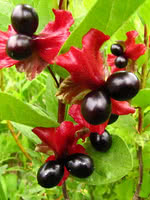
Bracted Honeysuckle is a shade loving shrub that is distinguishable from other honeysuckles by its square stem and pointed leaves. Native to most of North America, this honeysuckle is found along swamps, rivers, riparian zones and moist wooded areas.
If you have a erosion control project in mind, consider Bracted Honeysuckle.
American Bittersweet Quick Facts
Bracted Honeysuckle Quick Facts
Toxicity: All parts of plant are toxic to humans