 Owned
Owned

Black Elderberry vs Chester Thornless Blackberry
Sambucus canadensis
Rubus fruticosa Chester (Thornless)
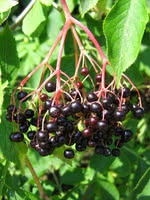
Black Elderberry is a deciduous shrub native to eastern North America. You can plant this shrub in moist areas and it will help stabilize your soil. You can also use it on rural properties anywhere you'd use a lilac.
Black Elderberries are considered to be partially self-pollinating. So while they will still produce some berries without cross-pollination, planting with another variety will increase yields. Consider planting with Ranch Elderberry or Bob Gordon Elderberry.
Warning: the seeds, stems, leaves, roots, and uncooked berries of the Black Elderberry are poisonous to humans when eaten in quantity. You should cook the berries to make them safe for human consumption.
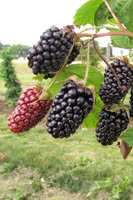
Chester Thornless Blackberry is a self-pollinating fruit-bearing shrub. In mid-summer, the Chester Thornless Blackberry produces large, sweet-tasting, heart-shaped blackberries that are perfect for fresh eating. It is a semi-erect blackberry plant that requires little support from a trellis to keep its fruit off the ground. Don't forget to protect your berries. The birds love this shrub almost as much as you will.
Chester Thornless Blackberries are floricanes, primarily fruiting on second year canes. Each spring cut back all two-year old canes, leaving only the last year’s growth.
Black Elderberry Quick Facts
Chester Thornless Blackberry Quick Facts
Toxicity: leaves, stems, and uncooked berries are poisonous to humans