 Owned
Owned

Mon-Fri 9am - 5pm Mountain time
Cart reopens in October
Subscribe to our email list
to stay updated
Nannyberry vs Ranch Elderberry
Viburnum lentago
Sambucus canadensis Ranch
NOT AVAILABLE THIS SEASON - MIGHT RETURN
COMING SOON
(new stock expected: fall of 2026)
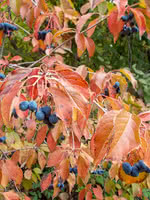
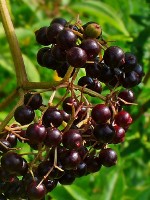
Nannyberry is a hardy shrub known for attracting wildlife. Its clusters of white flowers and tasty berries are suitable for bees, birds, and other animals.
Nannyberry is also used in urban yards and landscaping. This shrub makes a beautiful ornamental and is small enough to grow underneath power lines. Its berries can be eaten fresh or used in baking and preserves.
Makes a great hedge or privacy screen in an urban yard. Often has great red fall color to complement its spring flowers.
Ranch Elderberry is a vigorous and high-yielding Black Elderberry cultivar. It ripens earlier than other varieties and is smaller and more compact making berry harvest easier. The berries are well-suited for baked goods, jams, jellies, and syrups. They are high in vitamin C and reported to be beneficial for the immune system.
Black Elderberries are considered to be partially self-pollinating. So while they will still produce some berries without cross-pollination, planting with another variety will increase yields. Consider planting with Black Elderberry or Bob Gordon Elderberry.
Warning: the seeds, stems, leaves, roots, and uncooked berries are toxic to humans when eaten in quantity. Berries should be cooked to make them safe for human consumption.
Nannyberry Quick Facts
Ranch Elderberry Quick Facts
Toxicity: leaves, stems, and uncooked berries are poisonous to humans