 Owned
Owned

Canada Plum vs Black Gum
Prunus nigra
Nyssa sylvatica
NOT AVAILABLE THIS SEASON - MIGHT RETURN
NOT AVAILABLE THIS SEASON - MIGHT RETURN
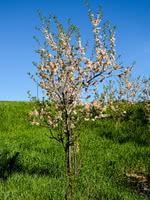
Canada Plum is a cold-hardy wild plum native to North America with small red fruit. They ripen in mid to late summer, with bitter, astringent skin surrounding sweet, slightly acidic flesh that clings to the stone. While some enjoy eating the plums fresh, they are more commonly used for baking and preserves. It is considered a universal pollinizer for other plum varieties and is often used for grafting or as a rootstock.
White to pink flowers appear in spring, often before the leaves, providing an early source of nectar and pollen for native bees and other pollinators. Birds and other wildlife also feed on the fruit, adding to its ecological value. Canada Plum can grow as a small tree or large, multi-stemmed shrub. It is well suited to a variety of projects, including fruit orchards for cross-pollination, as well as pollinator plantings, naturalization, and restoration projects.
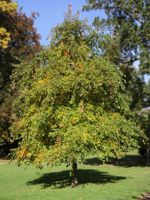
Black Gum is a slow-growing ornamental shade tree with a dense pyramidal shape. The foliage is dark green in the summer, and transitions to bright fall colours which include red, orange, purple, and gold. It is commonly used as an ornamental tree in parks and large gardens as a specimen or shade tree.
The small greenish white flowers provide nectar for bees and black tupelo honey is a sought after flavour. The small dark blue fruits which ripen in late summer will attract birds and other animals to your yard. The fruits are edible, but very sour, and are primarily used for pies, flavouring, and drinks. Plant the Black Gum where it will live long-term, as it has a large taproot and does not transplant well.