 Owned
Owned

Mock Orange vs Showy Aster
Philadelphus coronarius
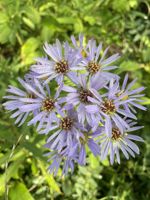
Eurybia conspicua
NOT AVAILABLE THIS SEASON - MIGHT RETURN
CUSTOM GROW
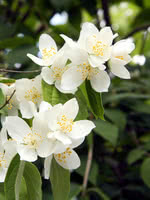
Mock Orange is an ornamental shrub known for its fragrant, white flowers. The scent is often described as orange-like with a hint of jasmine. Attractive to pollinators, hummingbirds, and humans alike.
Mock Orange is highly versatile, and can be used as an ornamental shrub, either alone or as a hedge. It is well suited for streambank stabilization and riparian zone restoration, due to its ability to grow in low, moist areas as well as those that are high and dry. Lewis Mock Orange also has the capability of being used in soil bioengineering projects such as live staking.
Showy Aster is a native perennial wildflower recognized for its tall stems topped with clusters of light purple blooms. Blooming from late summer into autumn, it provides an important late-season source of nectar and pollen for pollinators. It also produces seeds that are eaten by birds, extending its value to wildlife beyond the flowering season.
Drought tolerant once established, Showy Aster grows well in urban, rural, and disturbed sites. With its mix of ecological value and ornamental appeal, it is ideal for pollinator gardens, naturalization projects, and ecological restoration.