 Owned
Owned

Black Locust vs Lewis Mock Orange
Robinia pseudoacacia
Philadelphus lewisii
NOT AVAILABLE THIS SEASON - MIGHT RETURN
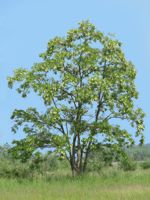
Black Locust is an attractive tree. Its distinctive leaves are made of about a dozen bright green leaflets. It also notable for its fragrant white flowers, which smell of citrus.
Black Locust can grow in many situations, but prefers dry areas with lots of sun. It is robust and is an excellent choice for establishing shade in dry, open areas.
Important note: Much of the Black Locust is toxic to humans and livestock, including seeds, bark, and leaves.
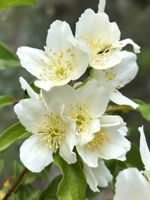
Lewis Mock Orange is a flowering ornamental shrub that produces an abundance of white, fragrant blooms. The flowers have a sweet scent similar to orange blossoms, with a hint of pineapple. They bloom for several weeks from late spring to early summer, attracting pollinators and other beneficial insects.
Native to North America, Lewis Mock Orange is found from the southernmost portions of Alberta and British Columbia, and south into the northwestern United States. It makes an attractive shrub and can be used in hedgerows, pollinator gardens, and naturalization projects. Blooms occur on the previous year’s wood, so it is recommended to prune after it has finished flowering.