 Owned
Owned

Mon-Fri 9am - 5pm Mountain time
Cart reopens in October
Subscribe to our email list
to stay updated
Black Locust vs Mountain Alder
Robinia pseudoacacia
Alnus incana subsp. tenuifolia
NOT AVAILABLE THIS SEASON - MIGHT RETURN
CUSTOM GROW
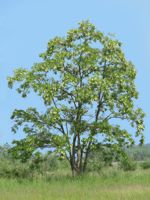
Black Locust is an attractive tree. Its distinctive leaves are made of about a dozen bright green leaflets. It also notable for its fragrant white flowers, which smell of citrus.
Black Locust can grow in many situations, but prefers dry areas with lots of sun. It is robust and is an excellent choice for establishing shade in dry, open areas.
Important note: Much of the Black Locust is toxic to humans and livestock, including seeds, bark, and leaves.
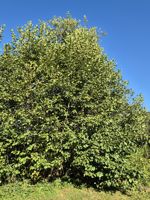
Mountain Alder is a native cold-hardy shrub or small tree often found along streams and in moist forested habitats. Its nitrogen-fixing ability enriches soils and supports surrounding vegetation, while its extensive root system helps stabilize streambanks and slopes. The fast growth rate allows it to establish quickly on disturbed sites, making it especially valuable in reclamation, restoration, and erosion control projects.
Often forming dense thickets, Mountain Alder enhances habitat quality in riparian and upland areas. It provides food and cover for various wildlife, including birds and small mammals. Recognized as an important species for soil and water conservation, it is well suited for riparian planting, naturalization, and ecological restoration.
Note: We use Sitka Alder for Alnus incana subsp. tenuifolia. This species is also known by many other common names, including Grey Alder, River Alder, and others. Please confirm the scientific name to ensure you are ordering the correct plant.