 Owned
Owned

Black Cherry vs Porthos Cherry
Prunus serotina
Prunus cerasus Porthos
NOT AVAILABLE THIS SEASON - MIGHT RETURN
COMING SOON
(new stock expected: later this season)
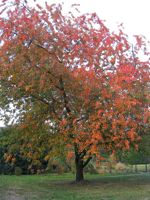
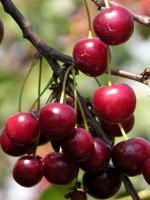
Black Cherry is common in eastern North America but a rare find elsewhere. This tree is shade tolerant and is often found in old fields, forest openings, and along fencerows.
The fruit is edible and is commonly used to flavor rum and brandy. It is also edible and often eaten fresh or used in wine or jelly. Black Cherry trees typically begin producing fruit when they are 10 years of age.
Black Cherry wood is a rich reddish-brown color and is strong, making it valued in cabinetry and woodworking. It is often used in reclamation as well.
The leaves can poison livestock as they contain cyanide derivatives and precursors. However, many have noted that deer still seem to browse their trees with impunity and birds and other animals eat the fruit when available.
Porthos Cherry is a cold-hardy dwarf sour cherry that features white spring flowers followed by large, dark red fruit in mid-to-late summer. Among sour cherries, Porthos is exceptionally sweet with well-balanced acidity. These cherries are ideal for fresh eating, freezing, baking, winemaking, and preserves.
Porthos Cherry was developed by the University of Saskatchewan Fruit Program as part of the Musketeer series and released in 2022. They recommended growing dwarf sour cherries as a shrub rather than a small tree. The shrub form tends to bear fruit earlier and is less susceptible to winterkill.
Sour cherries are self-fertile; however, planting with additional varieties for cross-pollination can increase yields.
Black Cherry Quick Facts
Porthos Cherry Quick Facts
Toxicity: bark and wilted leaves toxic to livestock