 Owned
Owned

Mon-Fri 9am - 5pm Mountain time
Cart reopens in October
Subscribe to our email list
to stay updated
Black Cherry vs American Bladdernut
Prunus serotina
Staphylea trifolia
NOT AVAILABLE THIS SEASON - MIGHT RETURN
NOT AVAILABLE THIS SEASON - MIGHT RETURN
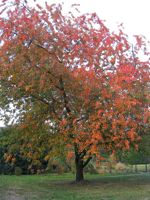
Black Cherry is common in eastern North America but a rare find elsewhere. This tree is shade tolerant and is often found in old fields, forest openings, and along fencerows.
The fruit is edible and is commonly used to flavor rum and brandy. It is also edible and often eaten fresh or used in wine or jelly. Black Cherry trees typically begin producing fruit when they are 10 years of age.
Black Cherry wood is a rich reddish-brown color and is strong, making it valued in cabinetry and woodworking. It is often used in reclamation as well.
The leaves can poison livestock as they contain cyanide derivatives and precursors. However, many have noted that deer still seem to browse their trees with impunity and birds and other animals eat the fruit when available.
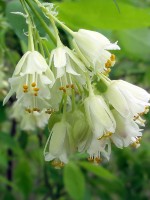
American Bladdernut is a fast-growing, ornamental shrub native to eastern North America. It can be grown as a large shrub or trained as a small tree. The small, drooping, white flowers are bell-shaped and grow in clusters. They appear in mid to late spring, attracting various pollinators. Well suited as an understory plant as it prefers shady and partial sun location with moist soils.
The blossoms mature into papery seed capsules and have been described as miniature Japanese lanterns. They are commonly used in dried flower arrangements. The seeds found within the pods are edible, and have a taste similar to pistachios. They can be eaten raw, used in baking or made into a sweet cooking oil.
Care should be taken when planting American Bladdernut, as it can spread quickly. It is prone to suckering and will self-seed. Plant the right tree in the right place.
Black Cherry Quick Facts
American Bladdernut Quick Facts
Toxicity: bark and wilted leaves toxic to livestock