 Owned
Owned

Mon-Fri 9am - 5pm Mountain time
Cart reopens in October
Subscribe to our email list
to stay updated
Aronia Berry vs Pygmy Caragana
Aronia melanocarpa
Caragana pygmaea
NOT AVAILABLE THIS SEASON - MIGHT RETURN
CUSTOM GROW
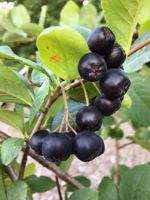
Aronia Berry produces black fruit that is often considered too astringent. This is why they are also referred to as Black Chokeberry. It is native to Eastern Canada and the Eastern United States. White to pink flowers appear in the spring which provides a nice contrast to the dark green foliage. In fall the leaves turn a vibrant orange to red.
It has a fast growth rate, strong roots, and can tolerate growing in wet soils. This makes it well suited for various projects including forming hedges, bank stabilization, erosion control, and in wetter riparian areas. They are also well suited as an understory plant as it grows well under other trees.
Aronia berries have their own unique flavour. The polyphenols and anthocyanins are touted as healthy antioxidants and lots of research seems to be underway on the health benefits of this fruit.
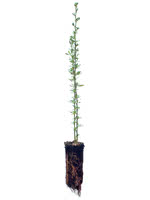
Pygmy Caragana is a shrub that is related to Common Caragana and has a compact size that is suitable for yards with limited space. Its size is perfect for landscaping and decorative hedges, and requires little maintenance. This nitrogen fixer has fine-textured foliage and small yellow flowers. Much like Common Caragana, it is hardy and drought tolerant.
Popular as a low maintenance commercial landscaping shrub and for hedging. This species does have tiny spines that might poke you a bit. It has a nice appealing texture when mature.