 Owned
Owned

Mon-Fri 9am - 5pm Mountain time
Cart reopens in October
Subscribe to our email list
to stay updated
Tundra Haskap (Honeyberry) vs Black Hawthorn
Lonicera caerulea Tundra
Crataegus douglasii
NOT AVAILABLE THIS SEASON - MIGHT RETURN
NOT AVAILABLE THIS SEASON - MIGHT RETURN
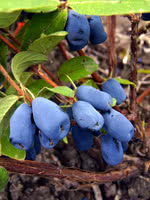
Tundra Haskap is sweet/tangy with a great flavour. The flavour of Haskaps is generally described as a cross between a blueberry and a raspberry. Tundra Haskaps are well suited to fresh eating, freezing, baking, and preserves. They have the firmest berries, which makes them well-suited for commercial production
For optimal fruit production, cross-pollination is required. Haskaps need to be planted with a compatible variety. Compatibility is influenced by both bloom time and genetics.
Tundra Haskap is an early-pollinating variety and pairs well with Aurora and Honey Bee.
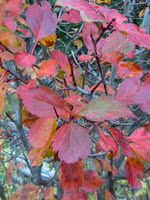
Black Hawthorn is a versatile plant that is native to wetlands and other areas with moist soils, but can also tolerate dry soils. This plant can be grown as a short shrub, or a tree reaching 30 feet tall.
Black Hawthorn is valued for erosion control and attracting pollinators. It also makes an attractive flowering ornamental that can be planted as a specimen or pruned as a hedge. It is commonly used in shelterbelts.