 Owned
Owned

Mon-Fri 9am - 5pm Mountain time
Cart reopens in October
Subscribe to our email list
to stay updated
Romeo Cherry vs Bracted Honeysuckle
Prunus x kerrasis Romeo
Lonicera involucrata
COMING SOON
(new stock expected: fall of 2026)
NOT AVAILABLE THIS SEASON - MIGHT RETURN
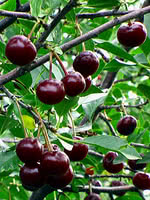
Romeo Cherry is a cold-hardy dwarf sour cherry. The dark red fruit are known for being sweeter than other varieties, often considered one of the sweetest dwarf sour cherries. It is typically highly productive, and the cherries are well suited to fresh eating, baking, and preserves. In the spring, beautiful white flowers cover the branches, adding ornamental value.
Romeo Cherry was developed at the University of Saskatchewan. It is recommended to grow dwarf sour cherries as a shrub rather than a small tree. The shrub form tends to bear fruit earlier and is less susceptible to winterkill.
Sour cherries are self-fertile; however, planting with additional varieties for cross-pollination can increase yields.
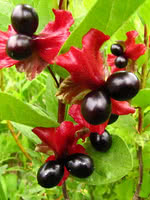
Bracted Honeysuckle is a shade loving shrub that is distinguishable from other honeysuckles by its square stem and pointed leaves. Native to most of North America, this honeysuckle is found along swamps, rivers, riparian zones and moist wooded areas.
If you have a erosion control project in mind, consider Bracted Honeysuckle.