 Owned
Owned

Mon-Fri 9am - 5pm Mountain time
Cart reopens in October
Subscribe to our email list
to stay updated
Washington Hawthorn vs Emerald Cedar
Crataegus phaenopyrum
Thuja occidentalis Smaragd
CUSTOM GROW
COMING SOON
(new stock expected: fall of 2026)
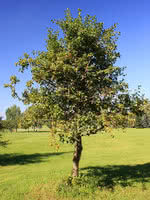
Washington Hawthorn is an attractive ornamental shrub that is dense enough to plant as a privacy screen. It produces clusters of white blooms in late spring to early summer.
Washington Hawthorn's red berries last throughout winter, bringing squirrels and birds to your property. In the fall, its foliage turns beautiful orange, scarlet, or purple.
One of the most overlooked trees on the prairies. This tree is often used as rootstock, a wildlife attractor, or a boulevard hedge. Give this one a second look.
This species is also known as one of the more salt-tolerant species for those with saline soils.
Please note: this plant is poisonous to dogs.
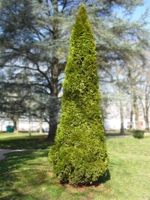
Emerald Cedar makes a great addition to landscapes, and is often used to form tight hedges or privacy screens. The thick scale-like foliage adds texture and colour to yards and is commonly used to line driveways. Unlike other cedars it retains its green colour throughout the fall and winter.
It is a semi dwarf species, which generally needs little pruning, but if desired it responds well to trimming. Its attractive, columnar shape and dense foliage makes it a desired landscape feature.
The Emerald Cedar won the award of merit from the Royal Horticultural Society.
Washington Hawthorn Quick Facts
Emerald Cedar Quick Facts
In row spacing: 0.9 m (3 ft)