 Owned
Owned

Common Wild Rose vs Washington Hawthorn
Rosa woodsii
Crataegus phaenopyrum
CUSTOM GROW
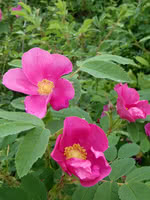
Common Wild Rose produces attractive pink roses and edible bright red rosehips. This tough, native shrub is a beautiful, low-maintenance addition to any garden. Common Wild Rose is very similar to Alberta (Prickly) Wild Rose but with fewer thorns.
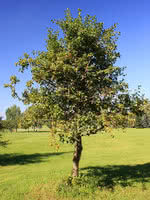
Washington Hawthorn is an attractive ornamental shrub that is dense enough to plant as a privacy screen. It produces clusters of white blooms in late spring to early summer.
Washington Hawthorn's red berries last throughout winter, bringing squirrels and birds to your property. In the fall, its foliage turns beautiful orange, scarlet, or purple.
One of the most overlooked trees on the prairies. This tree is often used as rootstock, a wildlife attractor, or a boulevard hedge. Give this one a second look.
This species is also known as one of the more salt-tolerant species for those with saline soils.
Please note: this plant is poisonous to dogs.
Common Wild Rose Quick Facts
Washington Hawthorn Quick Facts
In row spacing: 0.9 m (3 ft)