 Owned
Owned

Mon-Fri 9am - 5pm Mountain time
Cart reopens in October
Subscribe to our email list
to stay updated
Bearberry vs Garrington Chokecherry
Arctostaphylos uva-ursi
Prunus virginiana Garrington
COMING SOON
(new stock expected: fall of 2026)
NOT AVAILABLE THIS SEASON - MIGHT RETURN
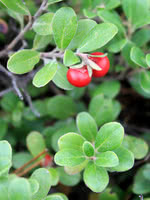

Bearberry is a dwarf shrub known for its creamy pink flowers and red edible fruits.
It is great as a filler in gardens and flowerbeds in place of invasive ground cover plants, like English Ivy.
Bearberry will attract hummingbirds, butterflies and bees to your property. It is one of the top 12 plants recommended by the Alberta Native Bee Council to support pollinators.
Garrington Chokecherry is a self-fertile and rare chokecherry that is commonly used for commercial orchards. This highly prized selection is known for its heavy yields of large, reddish-black fruit that are easily harvested with an over row harvester.
Garrington Chokecherry is also commonly used for hedges and edible landscaping. This shrubs' chokecherries are commonly used in baking, preserves, wine, and jams or jellies.