 Owned
Owned

Mon-Fri 9am - 5pm Mountain time
Cart reopens in October
Subscribe to our email list
to stay updated
Western Sand Cherry vs Empress Tree
Prunus pumila var. besseyi
Paulownia tomentosa
NOT AVAILABLE THIS SEASON - MIGHT RETURN
NOT AVAILABLE THIS SEASON - MIGHT RETURN
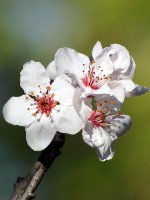
Western Sand Cherry is known for its unique, leathery grey-green foliage and beautiful white blossoms. It is a popular ornamental shrub in parks and front yards. Both you and the wildlife will love its edible small dark red to purple cherries.
Due to its small stature and spreading qualities, Western Sandcherry is suitable as an underplanting or groundcover.
Many people graft plum and cherry varieties to Western Sand Cherry and use it as rootstock. It is also popular to graft hardy apricots to.
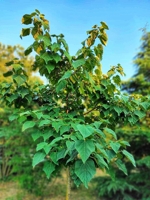
The Empress Tree is a fast growing, ornamental shade tree. It has purple, fragrant flowers that are quite attractive. The flowers emerge before the leaves in early spring. The leaves of this tree can grow very large, up to 30 cm long.
As one of the fastest growing trees in the world, this tree has been given considerable attention for carbon sequestration projects. It drops many seeds which can make it invasive in warmer climates. Please do some research and plant the right tree in the right place.
The Empress tree’s genus name comes from Princess Paulowna, daughter of Tsar Paul I of Russia.