 Owned
Owned

Mon-Fri 9am - 5pm Mountain time
Cart reopens in October
Subscribe to our email list
to stay updated
Common Snowberry vs Blue Moon Wisteria
Symphoricarpos albus
Wisteria macrostachya Blue Moon
NOT AVAILABLE THIS SEASON - MIGHT RETURN
(new stock expected: fall of 2027)
NOT AVAILABLE THIS SEASON - MIGHT RETURN
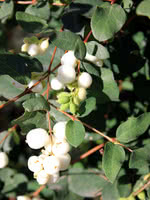
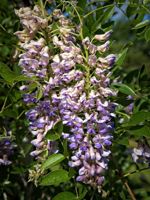
Common Snowberry is a small deciduous shrub with characteristic white to pink flowers and clusters of white fruit.
This North American native species is very adaptable, and can be used for erosion control in riparian and restoration areas. Snowberry's fruit attracts wildlife, and livestock can consume the berries without issue.
Blue Moon Wisteria is a striking, flowering vine, and the hardiest of the wisterias. Up to three times in one growing season you can expect showy, fragrant, lavender-blue flowers.
Make sure you plan your site as this vine requires a structure to support its mature weight. Try planting close to a post, trellis, or fence.