 Owned
Owned

Lodgepole Pine vs Japanese Black Pine
Pinus contorta var. latifolia
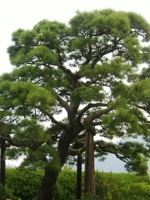
Pinus thunbergii
NOT AVAILABLE THIS SEASON - MIGHT RETURN
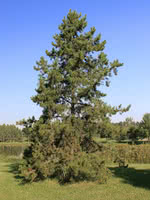
Lodgepole pine is well suited to western Canada's climate and growing conditions. This native pine noted for its rapid growth among evergreen. And as one of Canada's hardiest conifers, it can tolerate cold, shade, drought, and poor soil conditions.
Japanese Black Pine is known for its unique and irregular growth habit, making it a striking landscape addition. It typically does not grow with a central leader. This causes it to form a flat-top, classic bonsai-like shape when mature. When it has a central leader, it will grow with a twisted trunk. Another striking feature is the white apical buds which contrast with the surrounding green needles.
The Japanese Black Pine is an excellent candidate for a bonsai tree and is frequently used by the bonsai community. It is found along the Japanese coast and is salt tolerant.
Lodgepole Pine Quick Facts
Japanese Black Pine Quick Facts
In row spacing: 3 - 4 m (10 - 12 ft)