 Owned
Owned

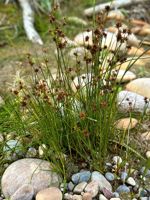
Bluebunch Wheatgrass vs Knotted Rush
Pseudoroegneria spicata (Agropyron spicatum)
Juncus nodosus
NOT AVAILABLE THIS SEASON - MIGHT RETURN
NOT AVAILABLE THIS SEASON - MIGHT RETURN
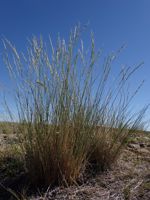
Bluebunch Wheatgrass is a native perennial bunchgrass common across prairies, foothills, and open woodlands. Longer-lived than many other grass species, it develops deep, fibrous roots that stabilize soils and make it drought-tolerant once established. It is a cool-season grass, growing most actively in spring and fall and slowing during the heat of summer.
This hardy grass provides excellent forage for deer, elk, and bighorn sheep, and is especially palatable to livestock. Its seeds feed birds and small mammals, while its bunching growth offers protective cover for ground-nesting birds such as sparrows and sage-grouse, as well as shelter for small mammals. Bluebunch Wheatgrass is well-suited to rangeland & prairie restoration, naturalization, and erosion control projects.
Knotted Rush is a native perennial wetland plant found growing in marshes, swamps, wet meadows, and along shorelines. It spreads by underground rhizomes to form colonies, which can also help stabilize soils and shorelines.
Its upright, slender stems and small clusters of greenish-brown seed heads add structure to wetland plant communities. Knotted Rush is well-suited to wetland conservation, rain gardens, naturalization, and restoration projects. As a cool-season grower, it grows actively during spring and fall, when temperatures are cooler.