 Owned
Owned

Junegrass vs Hardstem Bulrush
Schoenoplectus acutus
Koeleria macrantha
NOT AVAILABLE THIS SEASON - MIGHT RETURN
NOT AVAILABLE THIS SEASON - MIGHT RETURN
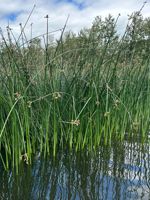
Hardstem Bulrush is a tall, native perennial wetland plant that thrives in shallow water and saturated soils, often forming extensive stands in wetland and shoreline habitats. Well suited to riparian restoration, bank stabilization, shoreline protection, and naturalization projects, it spreads through underground rhizomes to form dense colonies.
Hardstem Bulrush’s tall growth provides valuable cover and nesting habitat for waterfowl, songbirds, and small mammals, while its late-summer seeds provide food for waterfowl and other birds.
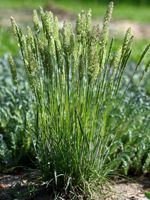
Junegrass is a native, low-growing perennial bunchgrass commonly found in prairies and open woodlands. It is a great choice for prairie restoration and naturalization projects or an attractive accent in ornamental plantings. Spear-shaped seed heads rise above the gray-green lower leaves, maturing to a tan color. Flowering earlier than other upright prairie grasses, it greens up quickly in spring and maintains its appeal well into the fall. It is shorter in stature and rarely forms thick stands, which adds to its understated visual appeal.
Adapted to cooler climates, Junegrass thrives in well-drained, rocky, sandy, or gritty soils and can tolerate drought, cold, and high altitudes. It actively grows in spring and fall when soil temperatures are cool, but in areas that are too hot or humid, it may go dormant by late summer.
As a perennial, it dies back to the crown each winter, it will regrow from the base in the spring. Avoid disturbing the crown during late winter to ensure healthy growth the following season.