 Owned
Owned

Bob Gordon Elderberry vs Lewis Mock Orange
Sambucus canadensis Bob Gordon
Philadelphus lewisii
COMING SOON
(new stock expected: fall of 2026)
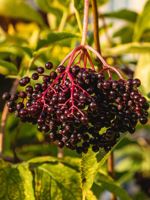
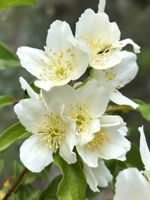
Bob Gordon Elderberry is a Black Elderberry cultivar that produces berries that are larger and sweeter than other varieties, making it one of the top cultivars. It produces large clusters of white flowers that turn into large clusters of dark purple to black berries. The berries are well-suited for baked goods, jams, jellies, and syrups. It was selected from the wild in Missouri.
The large berry clusters that the Bob Gordon Elderberry produces will often end up hanging downward. This makes it more difficult for birds to feed on the berries. If birds are a concern, this might be the right berry for you.
Black Elderberries are considered to be partially self-pollinating. So while they will still produce some berries without cross-pollination, planting with another variety will increase yields. Consider planting with Black Elderberry or Ranch Elderberry.
Warning: the seeds, stems, leaves, roots, and uncooked berries are toxic to humans when eaten in quantity. Berries should be cooked to make them safe for human consumption.
Lewis Mock Orange is a flowering ornamental shrub that produces an abundance of white, fragrant blooms. The flowers have a sweet scent similar to orange blossoms, with a hint of pineapple. They bloom for several weeks from late spring to early summer, attracting pollinators and other beneficial insects.
Native to North America, Lewis Mock Orange is found from the southernmost portions of Alberta and British Columbia, and south into the northwestern United States. It makes an attractive shrub and can be used in hedgerows, pollinator gardens, and naturalization projects. Blooms occur on the previous year’s wood, so it is recommended to prune after it has finished flowering.
Bob Gordon Elderberry Quick Facts
Lewis Mock Orange Quick Facts
Toxicity: leaves, stems, and uncooked berries are poisonous to humans