 Owned
Owned

Green Ash vs Black Walnut
Fraxinus pennsylvanica
Juglans nigra
NOT AVAILABLE THIS SEASON - MIGHT RETURN
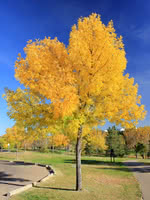
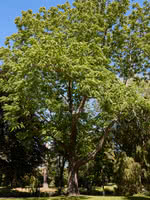
Green ash is a fast growing tree with incredible golden yellow leaves in fall. This tree is native to the prairies and is well suited for drought and cold. Green ash can also tolerate soil compaction, periods of flooding and a wide variety of soils including alkaline. This makes green ash ideally suited for use in urban environments.
The Black Walnut is a slow growing, large, straight-stemmed tree with an open crown. It produces dense, very hard, edible nuts.
Black Walnut has a deeply-furrowed, black bark. Its leaves are about 1 foot long, composed of 15 - 23 slightly stalked leaflets on a moderately stout stock which provide good dappled shade.
Despite being highly valued for its edible nuts and its shade tree aesthetics, it is rare to see this tree on the prairies.
Note: Black Walnut's roots produce a substance named juglone that is toxic to some other plants. Consider this when choosing where you plant a black walnut, as you will not be able to grow tomato, potato, cabbage, eggplant, blueberry, azalea, rhododendron, lilac, red pine and apple in the surrounding area.
Note: Plant this tree once. It will not respond well to transplanting.
Note: Although self-pollinating, planting two trees significantly improves nut production.
Green Ash Quick Facts
Black Walnut Quick Facts
In row spacing: 1.8 - 2.4 m (6 - 8 ft)