 Owned
Owned

Green Ash vs Siberian Elm
Fraxinus pennsylvanica
Ulmus pumila
PRODUCTION CANCELLED
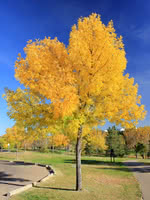
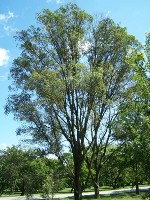
Green ash is a fast growing tree with incredible golden yellow leaves in fall. This tree is native to the prairies and is well suited for drought and cold. Green ash can also tolerate soil compaction, periods of flooding and a wide variety of soils including alkaline. This makes green ash ideally suited for use in urban environments.
Siberian Elm is a small to medium-sized deciduous tree. It has a similar form to American Elm, but smaller, with a more pyramidal habit and shorter lifespan. It is also more resistant to Dutch Elm disease and is very salt tolerant.
Siberian Elm was grown as shelterbelts in the prairies after the Dustbowl disasters, where its rapid growth and tolerance for drought and cold initially made it a great success. It is an excellent shade tree.
Note: Due to it's increasingly controversial reputation for being invasive in warmer climates, we are no longer planning to grow this species for retail purchase on a regular basis.
Green Ash Quick Facts
Siberian Elm Quick Facts
In row spacing: 1.8 - 2.4 m (6 - 8 ft)
In row spacing: 2.4 - 3 m (8 - 10 ft)