 Owned
Owned

Common Hackberry vs Harcourt Apple
Celtis occidentalis
Malus Harcourt
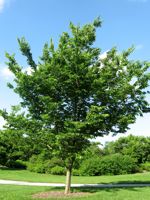
The Common Hackberry is a medium-sized deciduous tree that resembles the American Elm but is immune to Dutch Elm Disease. They are versatile and can adapt to a variety of growing conditions.
It produces purple-red, berry-like fruit with a large seed in the center. Both the sweet flesh, which tastes similar to dates, and the crunchy seed are edible. The fruit remains on the tree throughout the winter, offering a valuable food source for birds and other wildlife.
The Common Hackberry can also be a great addition to a pollinator garden. The tree itself is a host for the larvae of several butterfly species and the flowers provide a source of pollen and nectar.
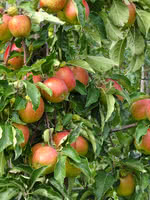
Harcourt Apple is a cold-hardy variety developed by the University of Alberta. In spring, it produces fragrant white blossoms shaded with pink. The medium-sized apples mature from late summer into fall, featuring red-striped skin with greenish-yellow highlights. The fruit is crisp and juicy, with a mild, pleasant flavour. They are well-suited for fresh eating, baking, and preserves.
For fruit production, cross-pollination is required. Apples need to be planted with another Apple or Crab Apple variety.
Note: We do not ship grafted apples to BC due to regulatory restrictions from the Canadian Food Inspection Agency.