 Owned
Owned

Schubert Chokecherry vs Ranch Elderberry
Prunus virginiana Schubert
Sambucus canadensis Ranch
NOT AVAILABLE THIS SEASON - MIGHT RETURN
NOT AVAILABLE THIS SEASON - MIGHT RETURN
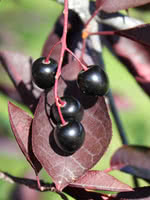
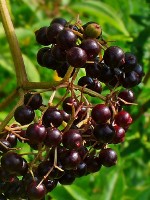
Schubert Chokecherry is similar to a western chokecherry but features beautiful purple-red leaves throughout the summer.
This small, flowering tree is perfectly suited as an ornamental for city yards.
The fruit from this tree is a staff favourite for jams, jellies, and wines.
Ranch Elderberry is a vigorous and high-yielding Black Elderberry cultivar. It ripens earlier than other varieties and is smaller and more compact making berry harvest easier. The berries are well-suited for baked goods, jams, jellies, and syrups. They are high in vitamin C and reported to be beneficial for the immune system.
Black Elderberries are considered to be partially self-pollinating. So while they will still produce some berries without cross-pollination, planting with another variety will increase yields. Consider planting with Black Elderberry or Bob Gordon Elderberry.
Warning: the seeds, stems, leaves, roots, and uncooked berries are toxic to humans when eaten in quantity. Berries should be cooked to make them safe for human consumption.
Schubert Chokecherry Quick Facts
Ranch Elderberry Quick Facts
Toxicity: Toxic to animals with segmented stomachs (horses, cattle, deer moose, etc.)
Toxicity: leaves, stems, and uncooked berries are poisonous to humans