 Owned
Owned

Schubert Chokecherry vs Trader Mulberry
Prunus virginiana Schubert
Morus x Trader
NOT AVAILABLE THIS SEASON - MIGHT RETURN
NOT AVAILABLE THIS SEASON - MIGHT RETURN
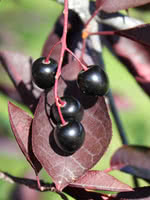

Schubert Chokecherry is similar to a western chokecherry but features beautiful purple-red leaves throughout the summer.
This small, flowering tree is perfectly suited as an ornamental for city yards.
The fruit from this tree is a staff favourite for jams, jellies, and wines.
The Trader Mulberry is a rare find. Named for the Trader family who brought the mulberry from Germany when they immigrated to the U.S. in 1982 and planted the original tree at their new homestead in North Dakota. This tree still bears fruit today! Similar to the Illinois Everbearing, but more winter hardy, this mulberry is a cross between white and red mulberry trees. This vigourous tree will produce large, sweet-tasting, virtually-seedless, black fruit throughout the entire summer and is great for fresh eating, jams, and wine. Do not plant near walkways or driveways as the berries can stain.
Schubert Chokecherry Quick Facts
Trader Mulberry Quick Facts
Toxicity: Toxic to animals with segmented stomachs (horses, cattle, deer moose, etc.)