 Owned
Owned

Schubert Chokecherry vs Russian White Mulberry
Prunus virginiana Schubert
Morus alba tatarica
NOT AVAILABLE THIS SEASON - MIGHT RETURN
NOT AVAILABLE THIS SEASON - MIGHT RETURN
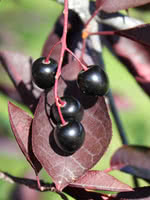
Schubert Chokecherry is similar to a western chokecherry but features beautiful purple-red leaves throughout the summer.
This small, flowering tree is perfectly suited as an ornamental for city yards.
The fruit from this tree is a staff favourite for jams, jellies, and wines.
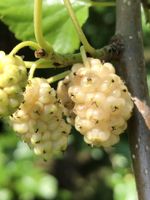
Russian White Mulberry is a cold hardy and adaptable tree. It is a great choice for the impatient gardener as it reaches its mature height in a short period of time and has an attractive, dense, and rounded form.
Odd looking berries are produced among a backdrop of glossy, deep green foliage. The blackberry-esque berries ripen slowly over the season, ranging in color from white, pink, and purple-violet. While the berries are not well regarded for fresh eating, they have made tasty jams and preserves.
Schubert Chokecherry Quick Facts
Russian White Mulberry Quick Facts
Toxicity: Toxic to animals with segmented stomachs (horses, cattle, deer moose, etc.)