 Owned

American Sycamore vs Sessile Oak
Quercus petraea
Platanus occidentalis
NOT AVAILABLE THIS SEASON - MIGHT RETURN
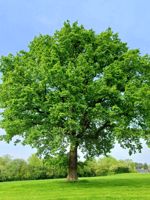
Sessile Oak is a large, long-lived deciduous tree with a wide, rounded crown. It is an important host plant for many pollinators, especially in its native range. Its acorns serve as a valuable food source for birds and small mammals, providing strong ecological value. It differs from many oaks as the leaves grow on longer stalks, whereas the acorns are stalkless. It can live for hundreds of years, with some surviving over 1,000 years in ideal conditions. As it matures, the tree develops a rugged, gnarled structure that provides heavy shade and a distinctive appearance.
More drought-tolerant than other oaks and does not do well in waterlogged or compacted soils.
Native to Europe and is the national tree of Ireland.
Note: Most Oak species can be considered toxic for many animals.
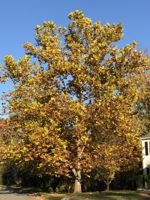
American Sycamore is the largest tree native to eastern North America. Generally too large and messy to be a street tree, American Sycamore thrives in large, open spaces, such as an acreage or farm.
The bark is one of the main features that draw people to this tree. The outer bark flakes off in irregular pieces to reveal an attractive white, green, and cream colored inner layer, providing winter interest.
American Sycamore has an extremely fast growth rate, gaining up to 6 ft in one year, and will easily reach its mature height in a short period of time. Be wary of this trees' root system, as it's typically very extensive and needs lots of room to expand.
Sessile Oak Quick Facts
American Sycamore Quick Facts
Toxicity: young leaves and acorns toxic to humans and animals when injested