 Owned
Owned

Mon-Fri 9am - 5pm Mountain time
Cart reopens in October
Subscribe to our email list
to stay updated
Eastern Cottonwood vs American Bladdernut
Populus deltoides
Staphylea trifolia
NOT AVAILABLE THIS SEASON - MIGHT RETURN
NOT AVAILABLE THIS SEASON - MIGHT RETURN
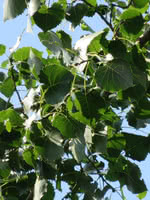
This fast and tall growing tree has an open, spreading crown and is more suited to waterside planting than other aspens and poplars.
Commonly found in floodplains, stream valleys and lake shores, this tree quickly fills in reclamation areas.
In order to reproduce and grow effectively, Eastern Cottonwood relies on the natural flooding cycle to ensure they are not out-competed by weeds and other plants.
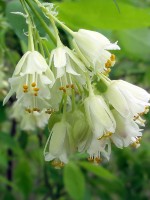
American Bladdernut is a fast-growing, ornamental shrub native to eastern North America. It can be grown as a large shrub or trained as a small tree. The small, drooping, white flowers are bell-shaped and grow in clusters. They appear in mid to late spring, attracting various pollinators. Well suited as an understory plant as it prefers shady and partial sun location with moist soils.
The blossoms mature into papery seed capsules and have been described as miniature Japanese lanterns. They are commonly used in dried flower arrangements. The seeds found within the pods are edible, and have a taste similar to pistachios. They can be eaten raw, used in baking or made into a sweet cooking oil.
Care should be taken when planting American Bladdernut, as it can spread quickly. It is prone to suckering and will self-seed. Plant the right tree in the right place.