 Owned
Owned

Mon-Fri 9am - 5pm Mountain time
Cart reopens in October
Subscribe to our email list
to stay updated
Arnold Hawthorn vs Top Hat Blueberry
Crataegus arnoldiana
Vaccinium x Top Hat
COMING SOON
(new stock expected: fall of 2026)
NOT AVAILABLE THIS SEASON - MIGHT RETURN
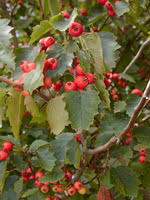
Arnold Hawthorn is a low-branched tree favored by wildlife and landscapers. This tree's beautiful white flowers and bright red berries make it an attractive ornamental in anyone's yard. Arnold Hawthorn is also used in windbreaks and riparian planting.
Despite its thorns, Arnold Hawthorn is a popular choice of food and shelter for deer and birds. Humans can also eat these berries fresh or preserved, but Arnold Hawthorn will not have high yields until it matures at 5-8 years.
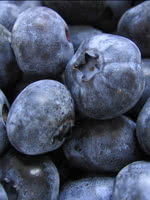
Top Hat Blueberry is ideal for decks, patios, and small yards. This compact blueberry produces loads of good tasting berries early in the summer. This variety's berries are well suited for baking.
While Top Hat Blueberry is self-pollinating, we recommend pairing it with another suitable blueberry to increase the berry production of both varieties.
We recommend planting Top Hat Blueberry into the ground or into planters that have at least 5 gallons of soil per plant for the best results. Do not plant them into pots (voids your guarantee).
Note: Blueberries require very specific soil conditions. They need well-drained soil with a pH between 4.5 and 5.0. If the starting pH of your soil is between 5.1 and 6.2 you can lower it by adding sulfur. We recommend against planting blueberries in soil with a starting pH greater than 6.2. Please do your own research before buying any blueberry plants.