 Owned
Owned

Black Locust vs Cypress Oak
Robinia pseudoacacia
Quercus robur Fastigiata
NOT AVAILABLE THIS SEASON - MIGHT RETURN
NOT AVAILABLE THIS SEASON - MIGHT RETURN
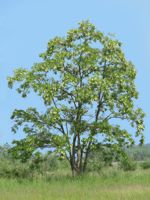
Black Locust is an attractive tree. Its distinctive leaves are made of about a dozen bright green leaflets. It also notable for its fragrant white flowers, which smell of citrus.
Black Locust can grow in many situations, but prefers dry areas with lots of sun. It is robust and is an excellent choice for establishing shade in dry, open areas.
Important note: Much of the Black Locust is toxic to humans and livestock, including seeds, bark, and leaves.
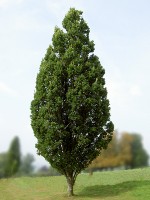
Cypress Oak is an upright, columnar tree that is well suited as a privacy screen or for lining paths and driveways. The upright branch angle causes it to have a narrower spread which makes it suitable for areas with limited space. It has been described as having an elegant, formal look, growing into an upright oval shape with a short trunk. Compared to other oaks it has a much faster growth rate, especially when young.
Cypress Oak is an ancient oak species of England. Traditionally druids respect the oldest oak trees, considering them to be oracles.
Note: Most Oak species can be considered toxic for many animals.