 Owned
Owned

Purple Leaf Sand Cherry vs Lewis Mock Orange
Prunus x cistena
Philadelphus lewisii
CUSTOM GROW
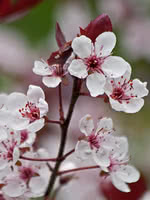
Purple Leaf Sand Cherry provides bright reddish-purple leaves that turn bronze-green in the fall. In the spring, tiny flowers with a pinkish white hue bloom. The flowers are small, but the impact comes from the shrub blossoming all at once.
The Purple leaf sand cherry can be susceptible to pests and diseases in more humid areas; a typical life span is approximately 15 years. Not suitable for a privacy hedge on its own but is often alternated with lilacs. Often used as an accent plant that attracts birds and bees.
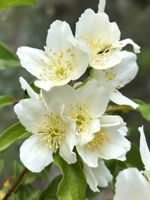
Lewis Mock Orange is a flowering ornamental shrub that produces an abundance of white, fragrant blooms. The flowers have a sweet scent similar to orange blossoms, with a hint of pineapple. They bloom for several weeks from late spring to early summer, attracting pollinators and other beneficial insects.
Native to North America, Lewis Mock Orange is found from the southernmost portions of Alberta and British Columbia, and south into the northwestern United States. It makes an attractive shrub and can be used in hedgerows, pollinator gardens, and naturalization projects. Blooms occur on the previous year’s wood, so it is recommended to prune after it has finished flowering.
Purple Leaf Sand Cherry Quick Facts
Lewis Mock Orange Quick Facts
Toxicity: the leaves and seed are slightly toxic