 Owned
Owned

Mon-Fri 9am - 5pm Mountain time
Cart reopens in October
Subscribe to our email list
to stay updated
Indigo Treat Haskap (Honeyberry) vs Witch Hazel
Lonicera caerulea Indigo Treat
Hamamelis virginiana
NOT AVAILABLE THIS SEASON - MIGHT RETURN
NOT AVAILABLE THIS SEASON - MIGHT RETURN
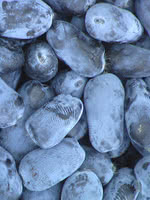
Indigo Treat has fruit similar in size and firmness to their Tundra variety, making it suitable for commercial production or your home garden.
Indigo Treat, like the Borealis Haskap, does not self-pollinate well. We recommend another variety, such as Honeybee or Berry Blue Honeyberry, be planted at a minimum 1:8 ratio with it to boost fruit production. Many experts suggest the highest Haskap yield comes from fields planted with the most varieties.
Due to stronger interest in newer cultivars, 2015 will be our last year selling Indigo Treat.
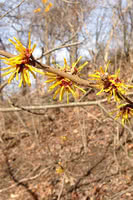
Witch Hazel is a deciduous shrub, or small tree, with a short trunk, bearing numerous spreading, crooked branches.
The seeds grow in a long, wooden pod with two to four seeds per pod. Upon ripening, the pods burst, firing the seeds up to 30km an hour.
The leaf and bark extract of Witch Hazel has been used as a remedy to common ailments such as inflammation, bruises and much more for many centuries.