 Owned
Owned

Mon-Fri 9am - 5pm Mountain time
Cart reopens in October
Subscribe to our email list
to stay updated
Borealis Haskap (Honeyberry) vs Falsebox
Lonicera caerulea Borealis
Paxistima myrsinites
COMING SOON
(new stock expected: fall of 2026)
CUSTOM GROW
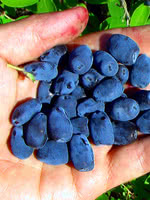
Borealis Haskap is a popular variety due to its great-tasting, sweet-tart berries. The flavour of Haskaps is generally described as a cross between a blueberry and a raspberry. Borealis Haskaps are well suited to fresh eating, baking, and preserves.
It has strong fruit holds and is not very firm so it does not do well when handled by equipment. This variety is a favourite for home gardens and U-Picks.
For optimal fruit production, cross-pollination is required. Haskaps need to be planted with a compatible variety. Compatibility is influenced by both bloom time and genetics.
Borealis Haskap is an early-pollinating variety and pairs well with Aurora and Honey Bee.
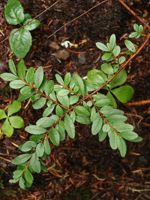
Falsebox is a hardy, native evergreen shrub found in forests, rocky slopes, and open woodland sites. Though small and easily overlooked among the leaves, the maroon flowers still supply nectar and pollen for pollinators such as native bees and flies. Blooming in spring, they provide an important early-season food source. Its year-round greenery adds visual interest through the winter.
Falsebox is a low-growing shrub that tolerates a wide range of conditions, including drought once established. It thrives particularly well beneath the shade of mature trees, where few other plants succeed. With its resilience and ecological value, Falsebox is well-suited for naturalization, restoration projects, and diverse landscape plantings.