 Owned
Owned

Mon-Fri 9am - 5pm Mountain time
Cart reopens in October
Subscribe to our email list
to stay updated
Tundra Haskap (Honeyberry) vs Witch Hazel
Lonicera caerulea Tundra
Hamamelis virginiana
NOT AVAILABLE THIS SEASON - MIGHT RETURN
NOT AVAILABLE THIS SEASON - MIGHT RETURN
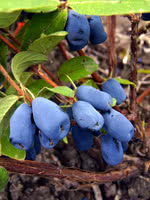
Tundra Haskap is sweet/tangy with a great flavour. The flavour of Haskaps is generally described as a cross between a blueberry and a raspberry. Tundra Haskaps are well suited to fresh eating, freezing, baking, and preserves. They have the firmest berries, which makes them well-suited for commercial production
For optimal fruit production, cross-pollination is required. Haskaps need to be planted with a compatible variety. Compatibility is influenced by both bloom time and genetics.
Tundra Haskap is an early-pollinating variety and pairs well with Aurora and Honey Bee.
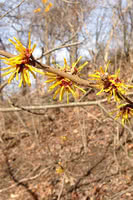
Witch Hazel is a deciduous shrub, or small tree, with a short trunk, bearing numerous spreading, crooked branches.
The seeds grow in a long, wooden pod with two to four seeds per pod. Upon ripening, the pods burst, firing the seeds up to 30km an hour.
The leaf and bark extract of Witch Hazel has been used as a remedy to common ailments such as inflammation, bruises and much more for many centuries.