 Owned
Owned

Red Elderberry vs Russian White Mulberry
Morus alba tatarica
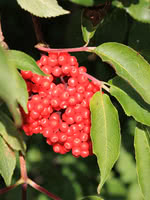
Sambucus racemosa
NOT AVAILABLE THIS SEASON - MIGHT RETURN
NOT AVAILABLE THIS SEASON - MIGHT RETURN
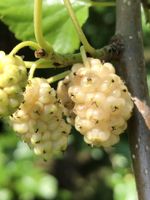
Russian White Mulberry is a cold hardy and adaptable tree. It is a great choice for the impatient gardener as it reaches its mature height in a short period of time and has an attractive, dense, and rounded form.
Odd looking berries are produced among a backdrop of glossy, deep green foliage. The blackberry-esque berries ripen slowly over the season, ranging in color from white, pink, and purple-violet. While the berries are not well regarded for fresh eating, they have made tasty jams and preserves.
Red Elderberry is an attractive, medium-sized deciduous shrub.
It produces clusters of white flowers in the spring and bright red berry-like drupes, which provide beautiful contrast against its coarse, textured green foliage.
Red Elder can be pruned as a small single or multi-stemmed tree.
Russian White Mulberry Quick Facts
Red Elderberry Quick Facts
Toxicity: toxic to humans