 Owned
Owned

Ninebark vs Aronia Berry
Physocarpus opulifolius
Aronia melanocarpa
CUSTOM GROW
NOT AVAILABLE THIS SEASON - MIGHT RETURN
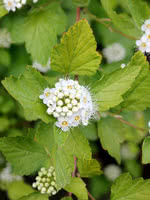
Ninebark is a small, multi-stemmed shrub, that is used to add texture or colour to any yard.
It features flaky, cinnamon-brown bark, attractive white flowers, and long, maple-like leaves.
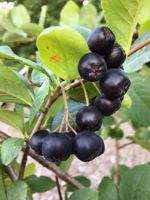
Aronia Berry produces black fruit that is often considered too astringent. This is why they are also referred to as Black Chokeberry. It is native to Eastern Canada and the Eastern United States. White to pink flowers appear in the spring which provides a nice contrast to the dark green foliage. In fall the leaves turn a vibrant orange to red.
It has a fast growth rate, strong roots, and can tolerate growing in wet soils. This makes it well suited for various projects including forming hedges, bank stabilization, erosion control, and in wetter riparian areas. They are also well suited as an understory plant as it grows well under other trees.
Aronia berries have their own unique flavour. The polyphenols and anthocyanins are touted as healthy antioxidants and lots of research seems to be underway on the health benefits of this fruit.